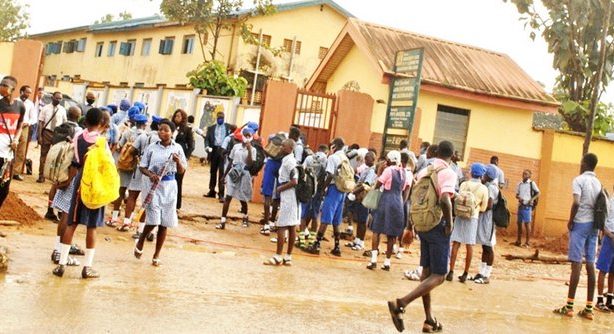
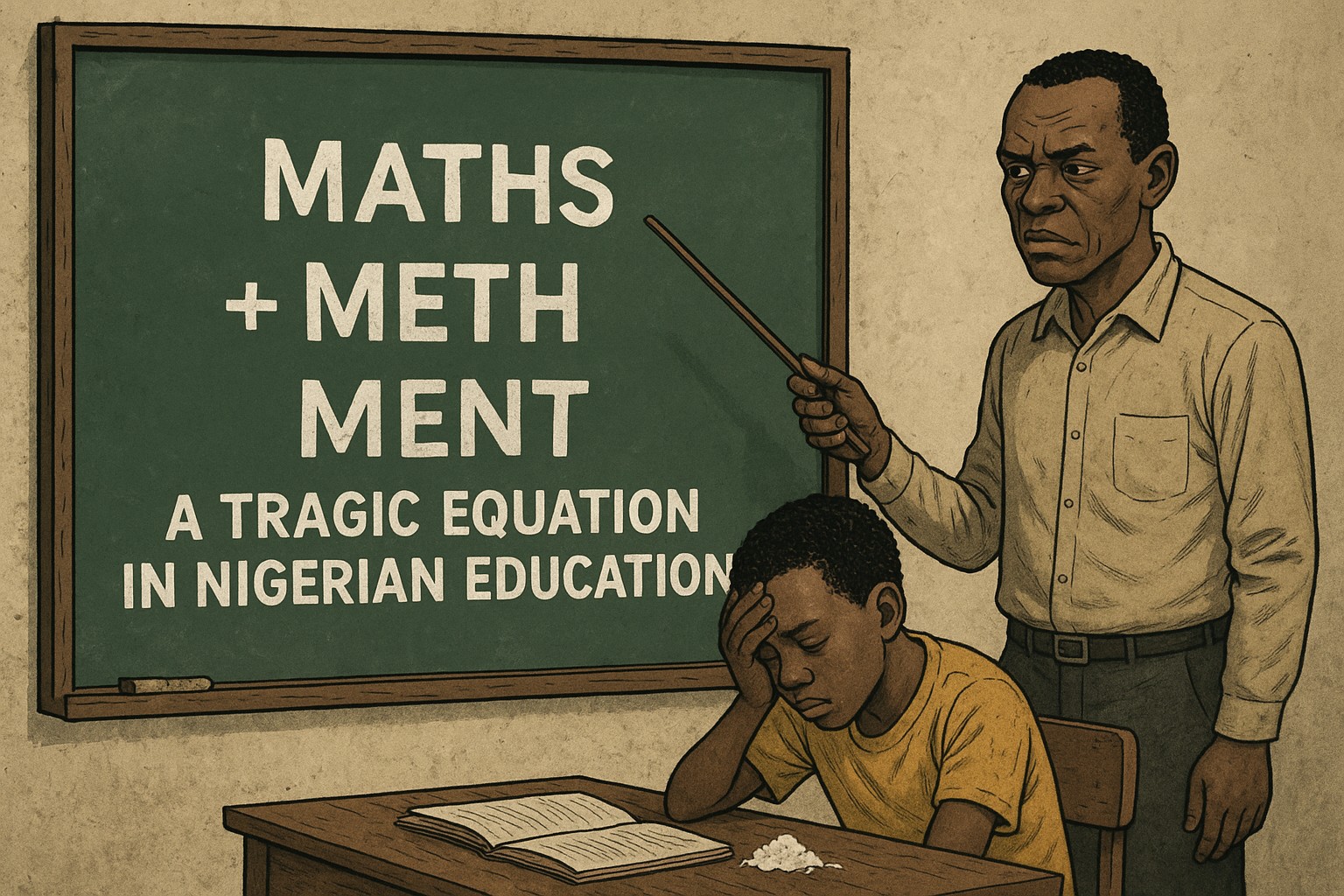
Maths, Meth and Ment: A Tragic Equation in Nigerian Education
There’s a strange new arithmetic in the Nigerian education system, and it goes something like this: “Maths – (minus) Arts = Progress”. At least, that’s the paradox the Federal Ministry of Education has handed the nation, following the recent announcement that Mathematics is no longer a compulsory requirement for arts students seeking university admission.
On paper, the policy appears inclusive — a bid to remove perceived barriers and boost access to tertiary education. But peel back the numbers, and we find a deeper rot. This isn’t just about Mathematics. This is about Maths, Meth and Ment — a metaphor for the decay in logic, substance, and mental structure in our national approach to education.
Maths: The Missing Variable
Mathematics is not just numbers on a blackboard; it is the bedrock of logical reasoning, structured thinking, and problem-solving. Even in the arts — from architecture to linguistics, from music theory to economics — a basic grounding in mathematical thinking provides clarity and coherence.
To remove maths from the equation is not liberation; it’s academic amputation. It suggests that we no longer value the cross-pollination of disciplines, the unity of thought that binds the sciences and the humanities in a common search for truth.
But the real issue isn’t just the decision — it’s the reason for it. The failure rate in Mathematics at secondary school level has been notoriously high for years. Instead of addressing the cause — underfunded schools, unqualified teachers, poor curriculum delivery — the system has chosen the lazy path of lowering the bar. It is the educational equivalent of a surgeon refusing to treat a tumor and simply telling the patient to accept the pain.
Meth: A Symptom of Escape
The second word in our troubling trinity, Meth, is not to be taken literally, though the rise of drug abuse among youths is itself a grim reflection of systemic collapse. Here, Meth stands as a metaphor for escapism — the hallucinatory illusion that we are progressing by sidestepping hard truths.
Nigerian education policy is increasingly driven by optics, not outcomes. We make announcements, cut ribbons, tweak admission criteria, and chase global rankings while the classroom crumbles. We are hooked on short-term fixes — addicted, perhaps, to performance without progress.
Like a meth-induced high, there’s a fleeting euphoria: more students will gain university admission. But at what cost? A generation of graduates lacking in critical thinking, in quantitative literacy, in the mental rigour to navigate a complex world. We are producing certificates, not scholars.
Ment: A Mind in Decline
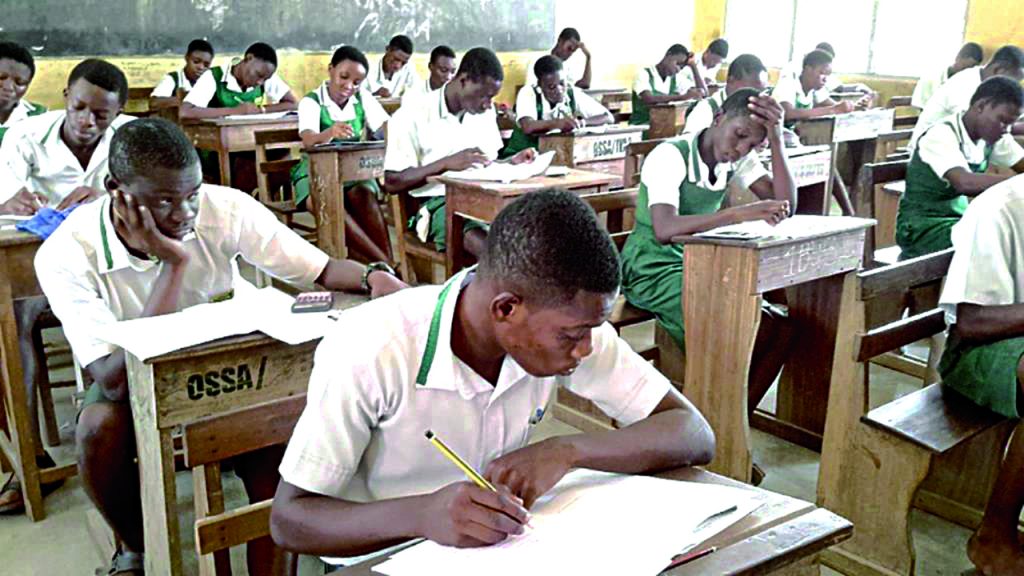
Ment — the root of words like mind, mental, comment, government — reminds us what is truly at stake: the Nigerian mind. Our national ment is fraying. And the education system, instead of mending it, is aiding the unraveling.
A society that removes mathematics to accommodate failure is not solving a problem; it is breeding a culture of intellectual laziness. It is telling students, “You do not need to think deeply to succeed.” In a world driven by data, technology, and innovation, this is a dangerous message.
It is no surprise, then, that our youth turn to entertainment for survival, to fraud for fast money, to migration for meaning. The mental infrastructure that should anchor them — sound education, analytical skills, ethical values — is missing. The ment has left the building.
Beyond the Equation: Where the Government Should Focus
To fix education in Nigeria, we must resist the urge to lower standards and instead raise support. The solution is not to abandon mathematics but to teach it better:
Train and re-train teachers, especially in STEM fields.
Invest in digital tools and teaching aids that make math more accessible.
Revise the curriculum to make math relevant to the arts and everyday life.
Establish remedial programs instead of exclusion policies.
Support special needs and struggling learners with targeted interventions.
Education reform must be holistic — curriculum, infrastructure, teacher welfare, monitoring, and student support. Anything less is cosmetic surgery on a system in cardiac arrest.
In the final analysis, Maths, Meth and Ment is more than a pun — it’s a parable. We are a nation tweaking numbers while the foundations rot. We are replacing hard truth with soft lies. But education is not a convenience store where subjects are chosen like snacks. It is a crucible — where minds are forged, shaped, and stretched.
If we continue on this path, we will have many graduates — and few thinkers. many degrees — but little wisdom. In a world that rewards precision, logic, and adaptability, removing mathematics is not empowerment.
Although the government in a statement by the Director of Press and Public Relations, Federal Ministry of Education, Boriowo Folasade has made a U-turn, insisting that the subject remains mandatory for admission into tertiary institutions. They clarified that English and Mathematics remain compulsory for all O’Level students.
It is subtraction masquerading as progress. And that, in any language, is a failed equation.