
Sickle Cell: Awareness is the difference
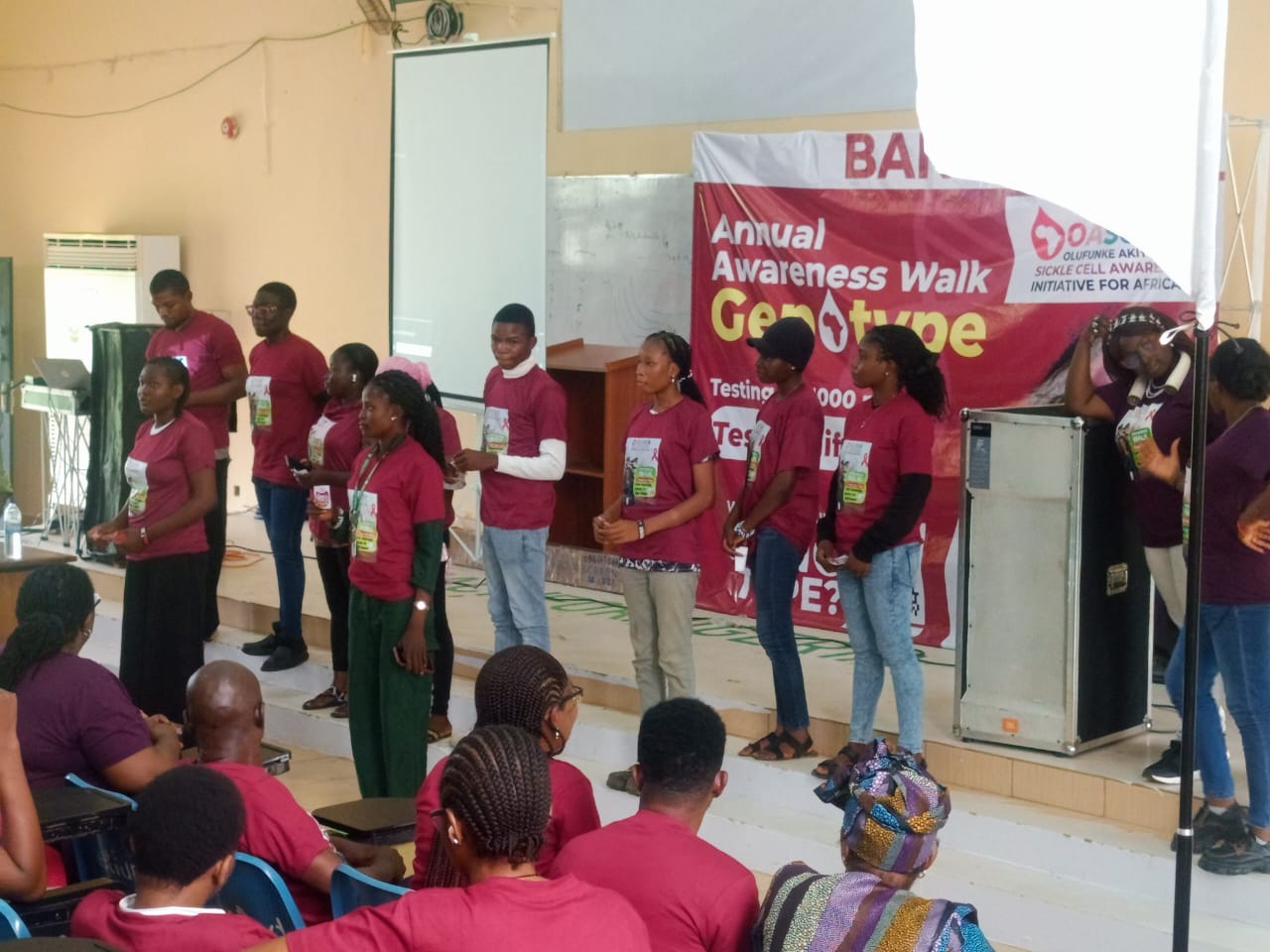
In furtherance of our commitment to SDG Goal 3: Good health and well-being, the initiative for Peace and Comfort joined Olufunke Akiyode Sickle Cell Awareness Initiative for Africa (OASCA) on Wednesday, October 8, 2025, for awareness walk and symposium organized in memory of late Dr. Olufunke Akiyode, a passionate advocate for sickle cell awareness who died on September 2024.
The event recorded large turnout of participants comprising students, health officials and other stakeholders.
The maiden edition of the event was held at the campuses of Federal College of Education (FCE), Osiele, Abeokuta and Federal University of Agriculture, Abeokuta (FUNAAB), Ogun State.
The guest lecturer, Dr. Kunle Ashimi, the former Chairman of the Nigerian Medical Association (NMA), Ogun State, in his paper “Reducing Sickle Cell Disease’, highlighted the importance of genotype testing, early detection, and genetic counselling in reducing the prevalence of sickle cell disease in communities, which records an estimated 150,000 births annually with the condition.
He described sickle cell disease as a genetic blood disorder that causes red blood cells to become sickle-shaped, blocking blood flow and resulting in intense, recurring pain.
He explained that the disease is inherited when both parents carry the sickle cell trait, which is why testing and counselling are crucial, especially before marriage.
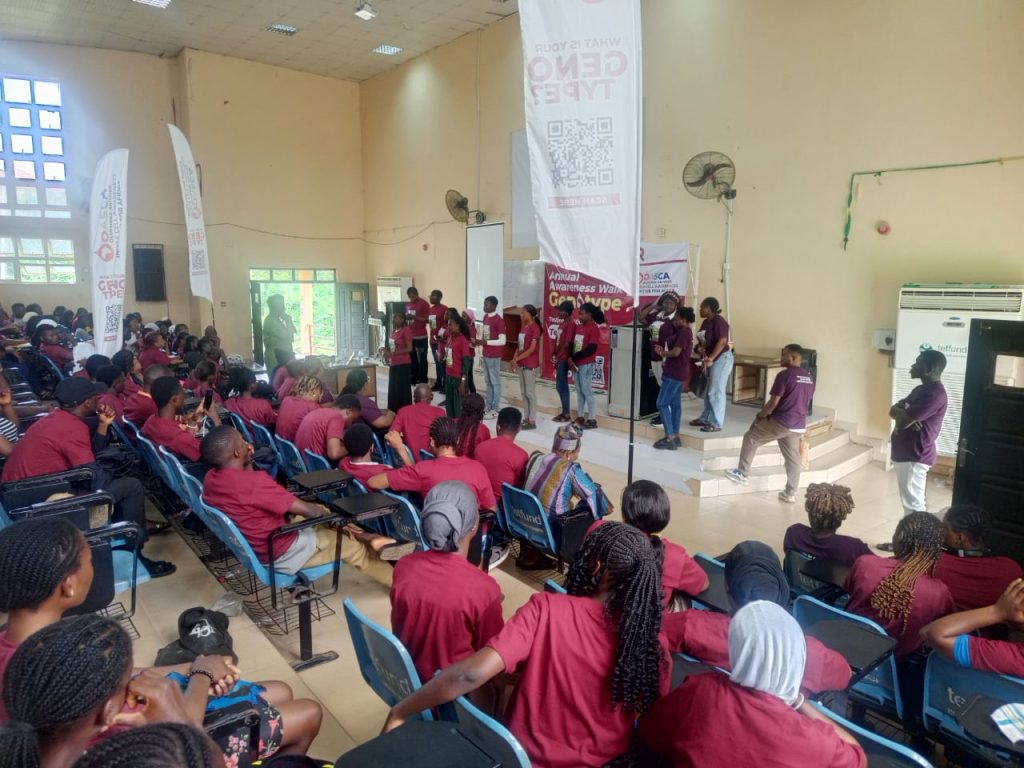
The guest lecturer urged young people to be proactive in knowing their genotypes and making informed decisions, and equally frowned at the social and cultural stigmas that still surround the disease in parts of Nigeria, where children with sickle cell are often labelled as “Abiku” or “Ogbanje” terms rooted in traditional beliefs about children who die young.
Ashimi condemned such myths, stating that these children are not spirits but individuals born with a medical condition that can be managed or even cured with proper treatment and support.
He shared the story of Victoria Gray, the first person to undergo gene-editing therapy using CRISPR for sickle cell disease, affirming that the treatment has been successful, offering new hope for what could become a permanent cure for those living with the condition.
He advocated for the integration of genotype screening into public health policy, including its inclusion as a mandatory component of premarital health checks, and called on government bodies, religious leaders, and educational institutions to take an active role in raising awareness and supporting prevention efforts in their communities.
“The difference is the awareness, if you know you have the sickle cell, take more water, don’t be dehydrated, don’t exert yourself unnecessarily. When you pant, your crisis can start. People with sickle cell diseases marry and give birth but the level of care they need is different from the general public.
“It is simple to end sickle cell diseases. Genotype testing is not just a medical thing it’s a life requirement. If we start today, ending sickle cell is as sure as the sun rising tomorrow,” he concluded.
The elder sister of the deceased Dr. Abiola Afolabi-Kayode explained that the initiative was created to continue Olufunke’s legacy of promoting sickle cell awareness, public health education, and community service.
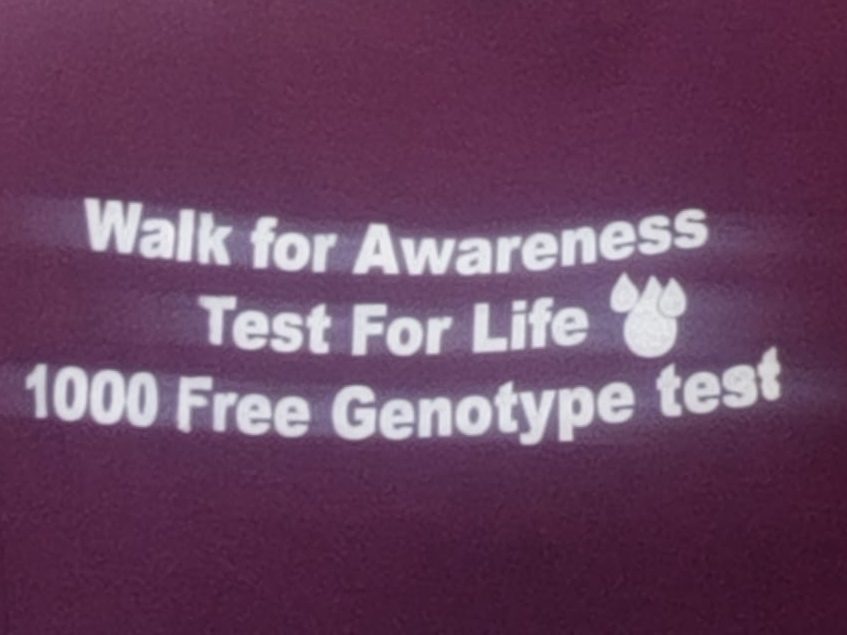
She announced that 500 students will get free Genotype test at the school laboratory courtesy of the Initiative.
She added that six students of FUNAAB where the deceased was an alumnus, will get scholarships annually alongside monthly stipend during the period of scholarship.
The event equally featured quiz and dance competitions among students, including a quiz on the deceased biography, while winners received gifts as part of efforts to make learning about sickle cell interactive and engaging.
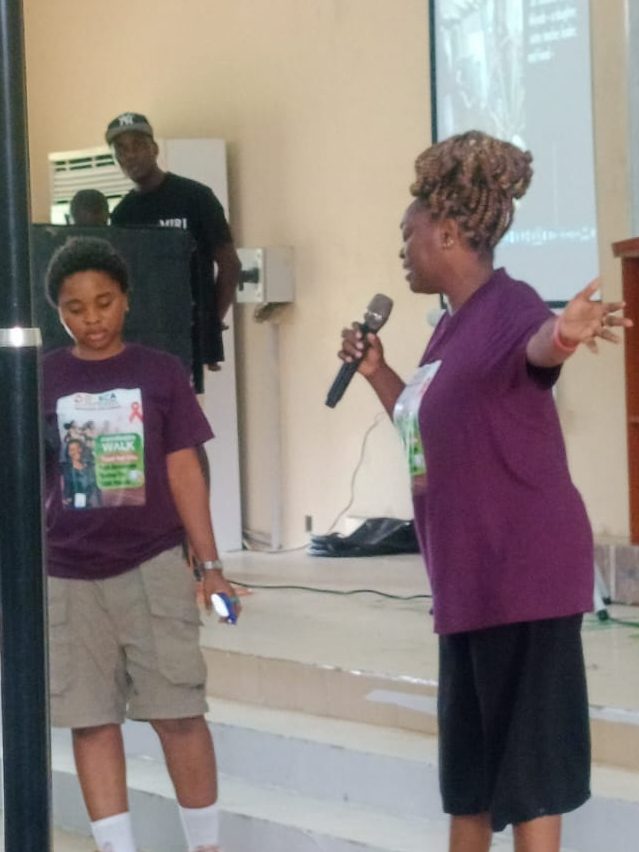
Side attraction at the event was the presence of Yinka Davies, a Nigerian singer, dancer, lyricist, vocalist and judge of reality show and Nigerian Idol who thrilled students with her sonorous voice and also lent her voice in the Sickle Cell Awareness campaign and memory of the deceased.