
AU, Turkey, and United States Surge to Halt al Shabaab; DRC Peace Talks; Uganda’s Role in the Eastern DRC
Authors: Kathryn Tyson, Yale Ford, and Liam Karr
The Critical Threats Project’s Africa File provides regular analysis and assessments of major developments regarding state and nonstate actors’ activities in Africa that undermine regional stability and threaten US personnel and interests.
Key Takeaways:
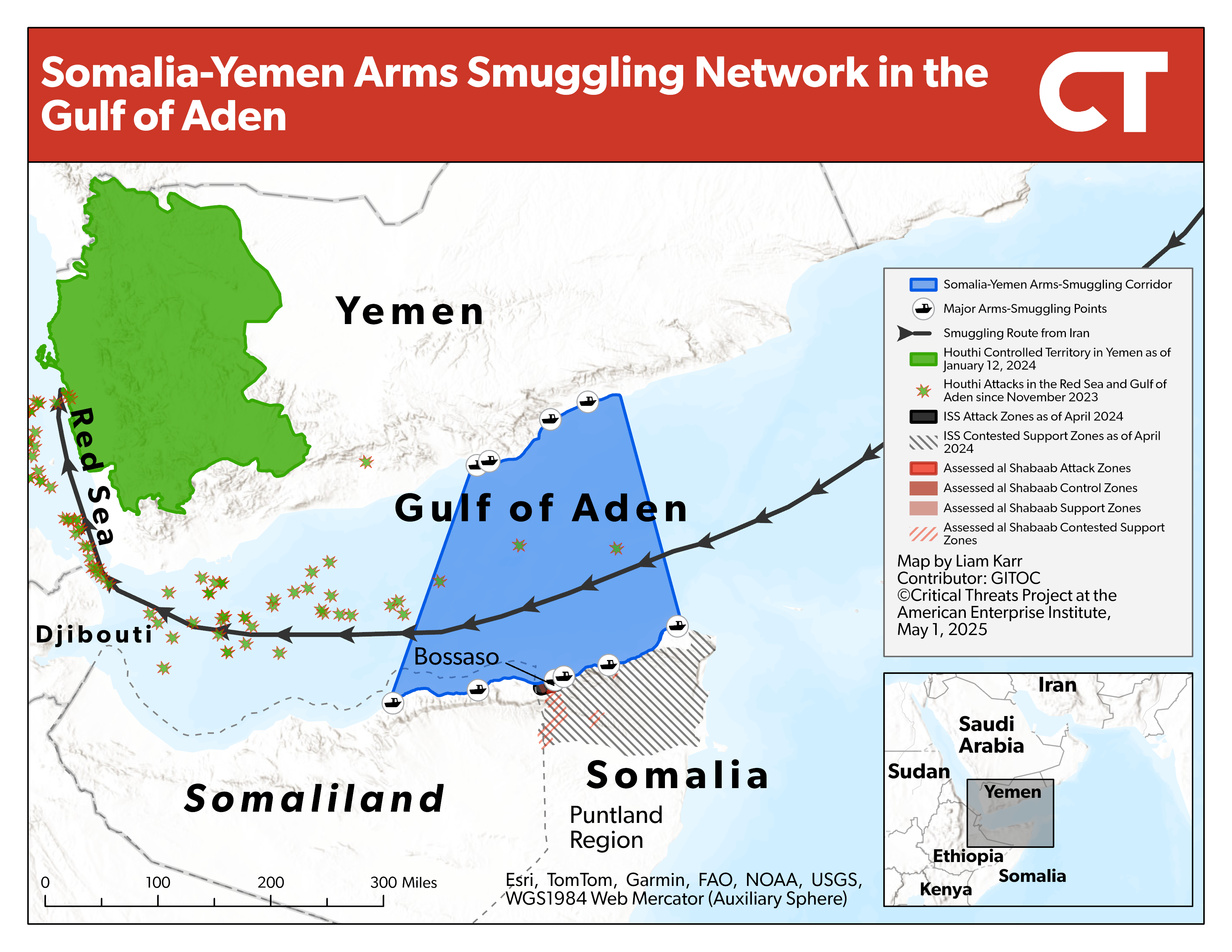
Somalia. Somalia’s international partners are increasing their efforts to counter al Shabaab in response to the group’s significant gains in 2025. The African Union (AU) peacekeeping mission in Somalia has proposed nearly doubling the number of troops in Somalia. This surge would represent the largest AU presence in Somalia since the end of the 14-year AU Mission in Somalia (AMISOM) in 2022. Turkey and the United States have already increased their support for Somali security forces in 2025. Al Shabaab threatens US regional interests in the Red Sea through its collaboration with the Yemeni Houthis.
Democratic Republic of the Congo: A détente between the Democratic Republic of the Congo (DRC) and Rwanda will likely limit the scale of violence in the eastern DRC, but proxy fighting between the various pro-Congolese militia groups and Rwanda-backed M23 rebels will almost certainly continue in the absence of a broader agreement with M23. Qatar and the United States have successfully advanced peace talks between the DRC and Rwanda over the conflict in the eastern DRC.
Separate negotiations between the DRC and Rwandan-backed M23 rebels have made much slower progress, however, and fighting involving M23 has continued despite the peace talks. Pro-government Wazalendo fighters and other anti-Tutsi militias are a significant obstacle to peace- and trust-building efforts—regardless of DRC-M23-Rwanda negotiations—because the militias are not involved in these talks and the DRC is likely unable to control the militias.
Uganda. Uganda is working with actors on multiple sides of the conflict in the eastern Democratic Republic of the Congo (DRC) to hedge and strengthen its sphere of influence. Uganda has developed a security partnership with the DRC in recent years. However, Uganda also maintains ties to the Rwandan-backed M23 rebel movement and has activated its own rebel proxies in the eastern DRC.
Uganda is using these relationships to counterbalance Rwandan influence in the eastern DRC and unilaterally influence Congolese affairs. Ugandan meddling perpetuates conflict in the eastern DRC by proliferating the number of armed actors, injecting regional competition into local conflicts, and complicating peace efforts.
Members of the African Union (AU) peacekeeping mission in Somalia called to surge troop numbers in Somalia to the highest levels since 2022 to combat al Shabaab.[1] Leaders from Djibouti, Egypt, Ethiopia, Kenya, and Uganda discussed recent al Shabaab military gains and the AU Support and Stabilization Mission in Somalia (AUSSOM) during high-level meetings in Uganda on April 24.
The AUSSOM partners said that there is an “urgent need” to increase AUSSOM by 8,000 soldiers.[3] AUSSOM succeeded the previous AU peacekeeping mission in January 2025 and has approximately 11,900 soldiers in Somalia to combat al Shabaab, support the development of Somali security forces, and facilitate the transfer of security responsibilities to the Somali government by 2029.[4] The AUSSOM partners also proposed increasing Somalia’s air assets and capabilities, fortifying AUSSOM bases, and strengthening civil-military relations to deter and degrade al Shabaab.
Read more here